
A brown upholstery swatch and a brown wood sample can each look right on their own. Seen together on a sofa with an exposed frame, one can read redder or more glossy than you expected. Compare the pair before approving either finish.
Start with the surfaces you will see together
Hold the upholstery against the wood sample where the two would meet. On a sofa with exposed rails, that may be at the seat edge or below the arms. On a dining chair, it may be just above the legs. Decide whether you want the wood to blend into the upholstery or outline it. Try both next to your floor, rug or dining table.
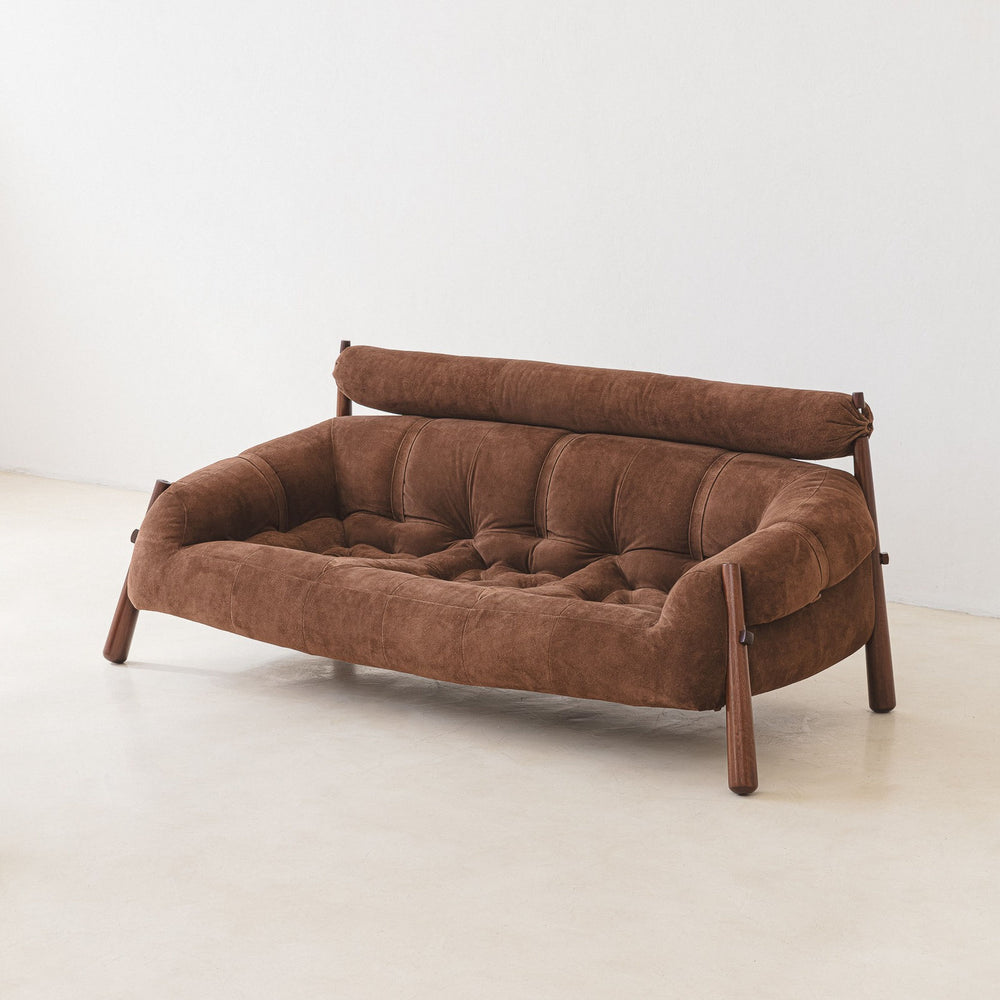
The MP-81 silhouette shows how much of the wood frame sits in view. This photograph is a design reference, not a colour match.
Compare in daylight and at night
Stand the wood sample at the angle it will sit on the furniture. Drape the upholstery over a rounded edge and turn it so you can see any change in the surface as the light moves. On a glossy wood finish, what you see straight on may differ from what you see at an angle. Check both samples again under the lamps you will use at night.
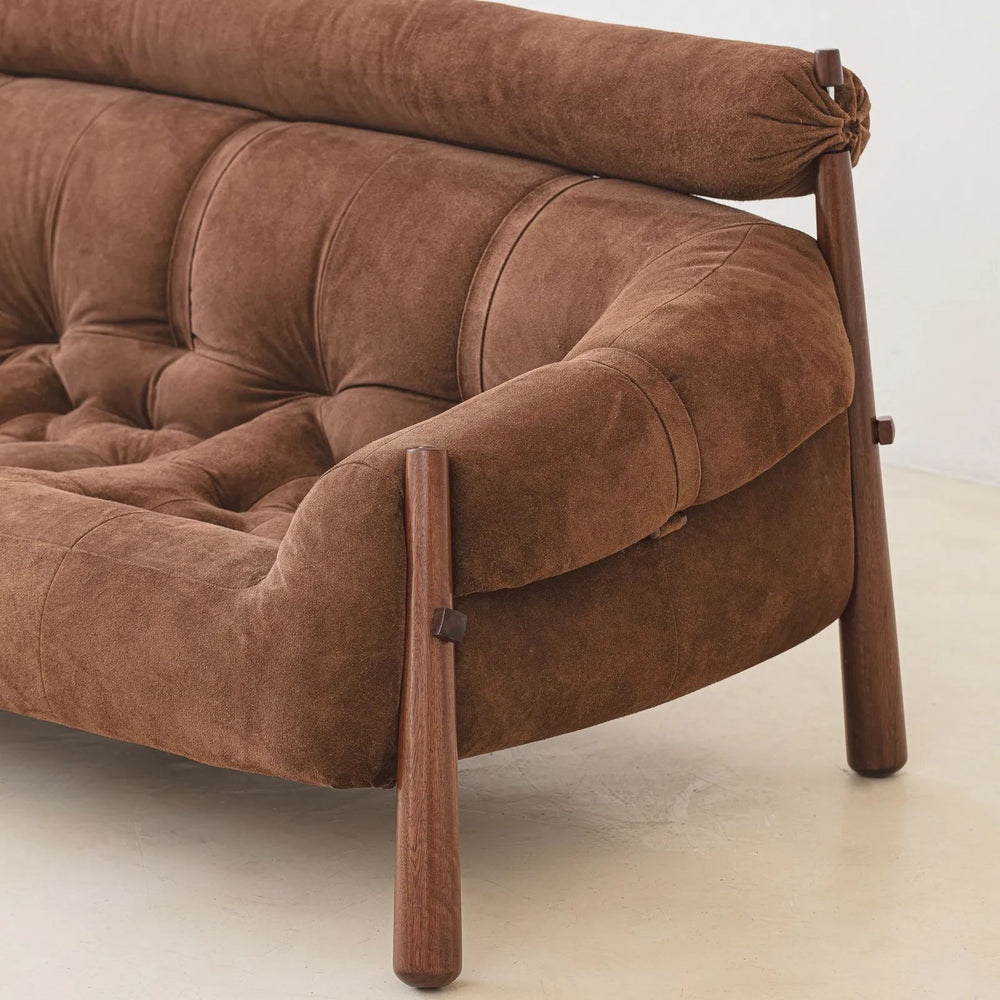
A side view helps locate the surfaces you want to compare, especially where the frame meets the upholstery.
Record what you approved
Keep the upholstery name and swatch code together with the wood species, stain or finish reference, and intended sheen. A walnut-coloured finish describes an appearance; it does not tell you what the frame is made of. If several pieces will sit side by side, ask which references can be matched and what natural variation to expect.
Browse Vintara’s upholstery materials, see the MP-81 sofa design, or ask about samples for the piece you are considering.