
A pedestal dining table can make it easier to slide chairs around the edge, especially when you add an extra place setting. Where the base widens, though, it can get in the way of your feet. To judge fit, look at the table from above and from the side before deciding how many chairs to order.
Use three dimensions, not just the top size
Ask for the tabletop width and length, the base footprint where it meets the floor, and the floor-to-underside height at the edge. If a rail, plate or thicker section sits under the top where you plan to sit, measure to that lower point as well. Check the horizontal distance from the table edge to the widest part of the base at each seat.

Draw in the actual chairs
Mark the top and base outlines with painter’s tape. Put your chairs where they’ll sit at dinner, and test how far they push in afterward. On an oval, try a chair at each end as well as on the long sides. Armchairs need room beneath the top, and wide chair legs can run into the pedestal foot even when the seat itself clears.
Walk behind an occupied chair
Ask someone to sit at the narrowest side while you walk past with a plate. Open nearby cupboard doors or pull out a drawer as you normally would. If that corner feels tight, move a chair to another position or turn the oval layout before assuming a smaller top is the only answer.
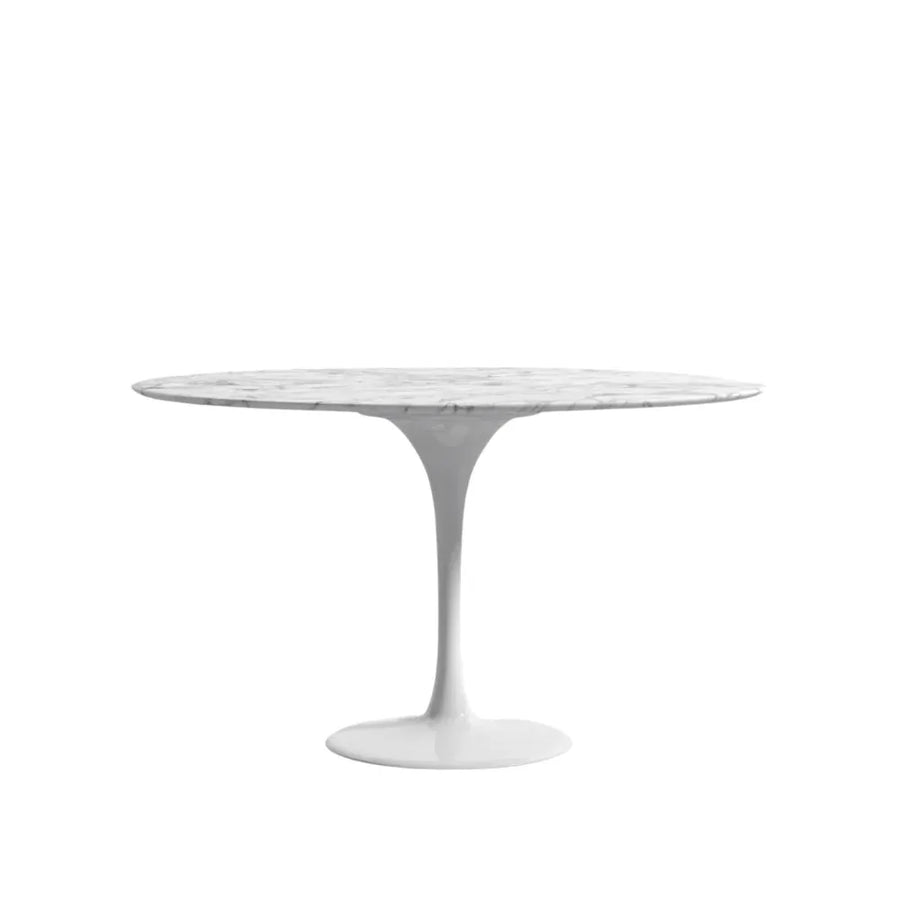
See the oval and round pedestal table options. For a custom layout, share a quick room sketch with chair width, seat and arm height, and the side that needs to stay clear.