
Furniture Arrangement Tips for Small Living Rooms: Make More Space Without Losing Comfort
Have you ever moved your sofa three times and still felt that your living room was too small?
Maybe the coffee table is in the way. Maybe the sofa blocks the door. Or maybe you have enough seats, but there is hardly any room to walk.
You might even be thinking about buying a new sofa. But wait! The problem may not be your furniture. It may be the way everything is arranged.
A small living room can still feel open, cozy, and easy to use. You do not need a bigger home or lots of new furniture. Sometimes, moving one chair or choosing a better sofa layout can make a real difference.
In this guide, you will learn how to arrange furniture in a small living room, choose the right sofa size, add extra seating, and avoid common mistakes.
You will also learn a simple way to test your layout before spending money on new furniture.
Let's make your living room work better for you.
1. Start with the Way You Move Around the Room
Before moving your sofa, think about how you use your living room every day.
Do you walk from the front door to the kitchen? Do you need to reach a balcony? Do children play on the floor? Do people often walk behind the sofa?
These small details matter.
A room may look beautiful in a photo but feel uncomfortable when you use it every day. Good furniture placement should make daily life easier.
Find Your Main Walking Paths
Stand at the entrance to your living room and look around.
Ask yourself three questions:
-
Where do I walk most often?
-
Which doors or windows do I need to reach?
-
Which pieces of furniture are in my way?
Imagine drawing lines on the floor to show your usual walking paths.
These paths should stay as clear as possible. Try not to place the coffee table, an extra chair, or a large sofa section in the middle of a busy walkway.
As a starting point, a main walkway of about 30–36 inches (76–91 cm) works well in many homes. Your room may need a different amount of space, depending on its shape and how you use it.
Try This Before Buying Anything
Here is a simple trick that can save you money.
Use painter's tape to mark the size of your sofa and coffee table on the floor. Walk around the shapes as if the furniture were already there.
Try opening doors and walking to the windows. If you share the room with a dining area, pull out the dining chairs, too.
Can you move around easily? Is there enough room to sit down and stand up?
If the answer is no, change the layout before you buy.
The best first step is not choosing furniture. It is making sure your room has enough space for the things you do every day.
2. Choose the Right Sofa Size for a Small Living Room
The sofa is often the largest piece of furniture in a living room. That is why choosing the right size matters so much.
A sofa that is too large can block walkways and make the room feel crowded. A sofa that is too small may not give your family enough space to sit.
The goal is to find a sofa that fits both your room and your life.
Measure Your Room Before Shopping
Start by measuring the length and width of your living room.
Then measure the area where you want to place the sofa.
Remember to leave room for the coffee table, chairs, and walking paths.
You should also measure the doors, hallways, stairs, and tight turns that the sofa must pass through during delivery.
A sofa may fit in your living room but still be too large to get through your front door.
If you are buying a modular sofa, check the size of each piece and the size of the full sofa when assembled.
Can You Put an L-Shaped Sofa in a Small Living Room?
Yes! An L-shaped sofa can work well in a small living room if the size and layout are right.
It can use a corner and give you several seats without needing a separate sofa and chair.
But there is one thing to watch: the longer part of the sofa may block a door or take up too much walking space.
Before buying, check:
-
The total length and depth.
-
The size of the longer section.
-
The space needed to reach doors and windows.
-
The room left for a coffee table.
-
Whether the sofa blocks the main walking path.
If the room feels too tight, a straight sofa with a separate lounge chair may work better.
Is a Loveseat Better Than a Sectional Sofa?
A loveseat is a small sofa made for two people. A sectional sofa has connected seating sections that create a larger seating area.
A loveseat can be a good choice if you want a simple layout with plenty of open floor space.
A sectional sofa may be better if you need more seats and have a corner that can fit it.
Neither option is always better. The right choice depends on your room size, the number of people in your home, and how you like to relax.
Why Smaller Furniture Is Not Always Better
You may think a small room needs lots of small furniture pieces.
But several small chairs and tables can make a room feel busy.
Sometimes, one well-sized sofa and one comfortable chair work better than four small pieces.
Think about the total amount of furniture in the room, not just the size of each item.
3. Use a Modular Sofa to Create a Flexible Layout
A modular sofa is made of separate pieces that fit together. Depending on the design, you may be able to move the pieces to create different seating layouts.
This can be helpful if your living room needs to serve more than one purpose.
For example, you may want a comfortable place to watch TV every day but also need extra seating when friends visit.
Three Modular Sofa Layout Ideas
Layout 1: Straight Sofa
Place the modules in a row along a wall or facing your TV.
This can work well in a long, narrow room because it keeps most of the seating in one area.
Layout 2: L-Shaped Sofa
Place the modules at a right angle to create an L-shape.
This may work well in a corner or in a room where you want to create a clear seating area.
Make sure the longer section does not block a door or walkway.
Layout 3: Sofa with an Ottoman
Place an ottoman near your sofa.
Depending on its design, it can be used as a footrest, an extra seat, or a place to set a stable tray.
You can move it when you need more floor space.
Is a Modular Sofa Right for Your Small Space?
A modular sofa can give you more layout choices, but it is not always the best option.
Some modules are large and deep. Others may need special connectors to keep them together.
Before buying, ask:
-
What are the dimensions of each module?
-
Which layouts can I create?
-
How do the pieces connect?
-
Can I add or remove modules later?
-
Will the sofa fit through my entrance?
Choose a modular sofa because its size and flexibility suit your home, not just because it looks good online.
4. Add More Seating Without Making the Room Crowded
Do you need another seat but do not have room for a second sofa?
A lounge chair may be the answer.
One well-placed chair can give you an extra seat without taking up as much space as a full sofa.
When Should You Choose an Accent Chair?
An accent chair can be useful if you want:
-
An extra seat for guests.
-
A quiet place to read.
-
A seat near a window.
-
A different shape or color in your living room.
-
Furniture that is easier to move around.
Before buying, check the chair's full width and depth. Some lounge chairs have wide arms or deep seats that take up more room than expected.
Where Should You Put a Lounge Chair?
Try placing the chair near the sofa, slightly turned toward the main seating area.
This can make the room feel more welcoming and help people talk to each other.
If your living room has a balcony, keep the path to the door clear.
A chair with slim legs or an open base may help the room feel visually lighter because you can see more of the floor. However, always check its actual size before buying.
Do All Your Furniture Pieces Need to Match?
No.
Your sofa and lounge chair can have different shapes and materials.
The trick is to connect them through color, texture, or style.
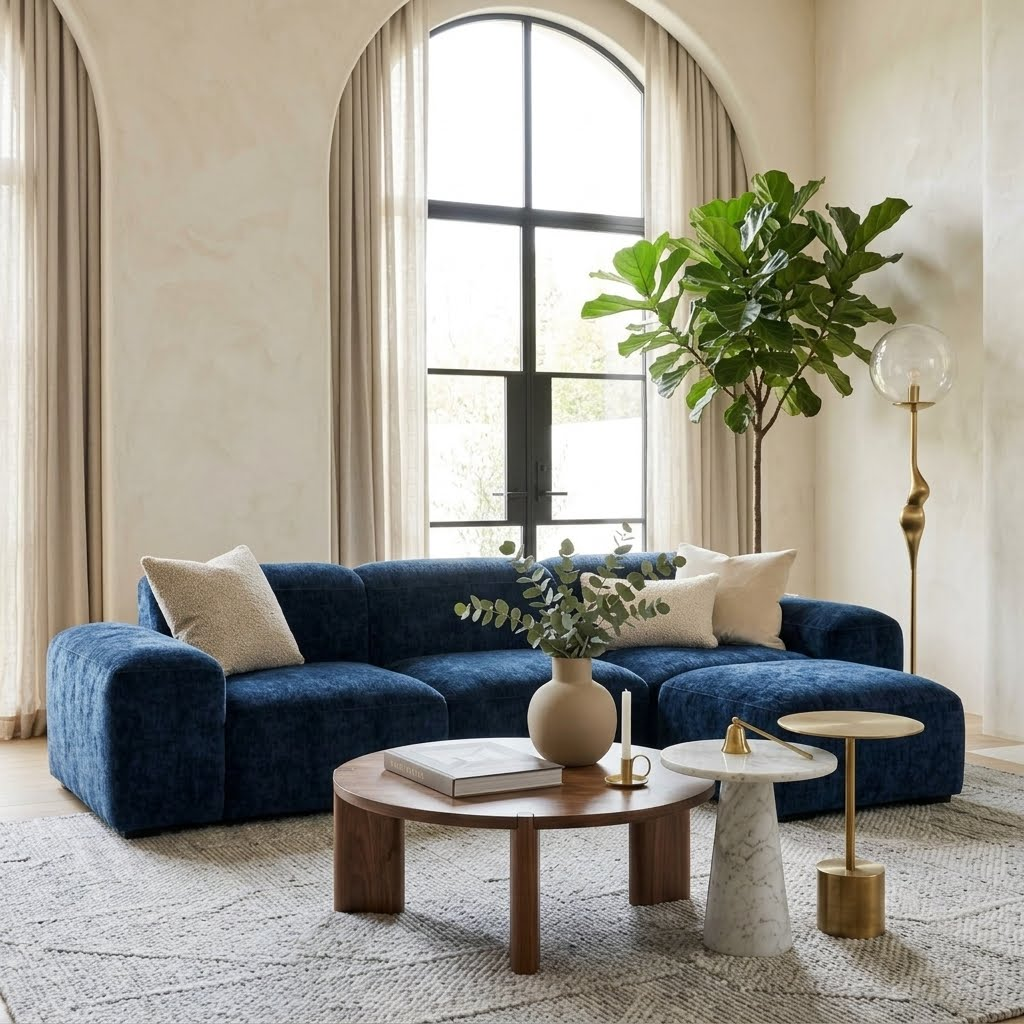
For example, a deep blue sofa can work with a cream chair and a warm wood coffee table. A neutral sofa can look interesting with a chair in a stronger color.
A few well-chosen pieces can make a small living room feel complete without filling every corner.
5. Choose the Right Coffee Table, Rug, and Side Tables
Even if your sofa fits perfectly, the wrong coffee table or rug can make the room feel crowded.
These smaller pieces should make the seating area easier to use, not harder to walk through.
How Much Space Should Be Between a Sofa and Coffee Table?
A useful starting point is about 14–18 inches (36–46 cm) between the sofa and coffee table.
This often leaves enough room for your legs while keeping drinks, books, and other items within reach.
If the table is too close, it may be hard to sit down or stand up. If it is too far away, you may need to lean forward to reach it.
Try different distances in your room before deciding.
Should You Choose a Round or Rectangular Coffee Table?
Both shapes can work in a small living room.
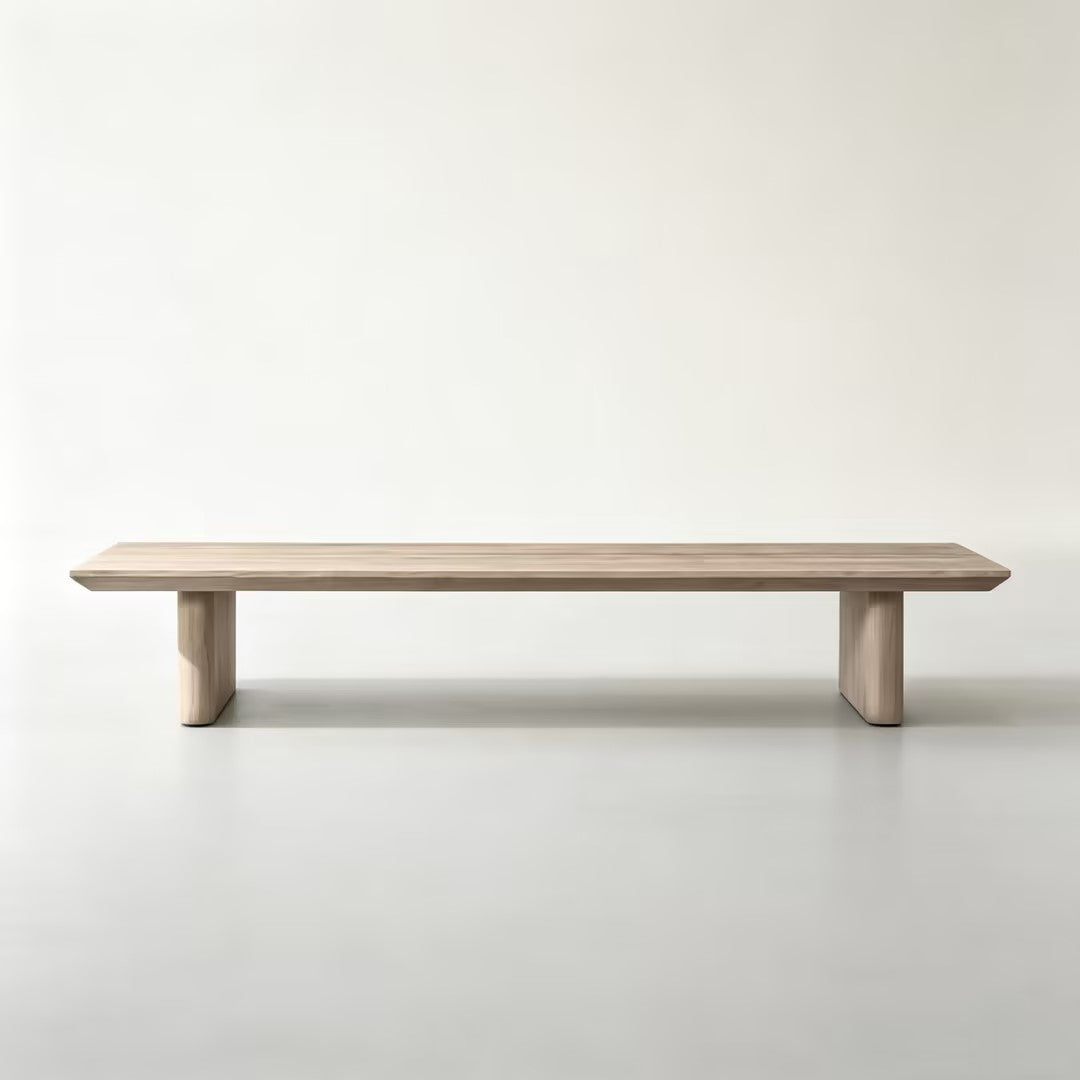
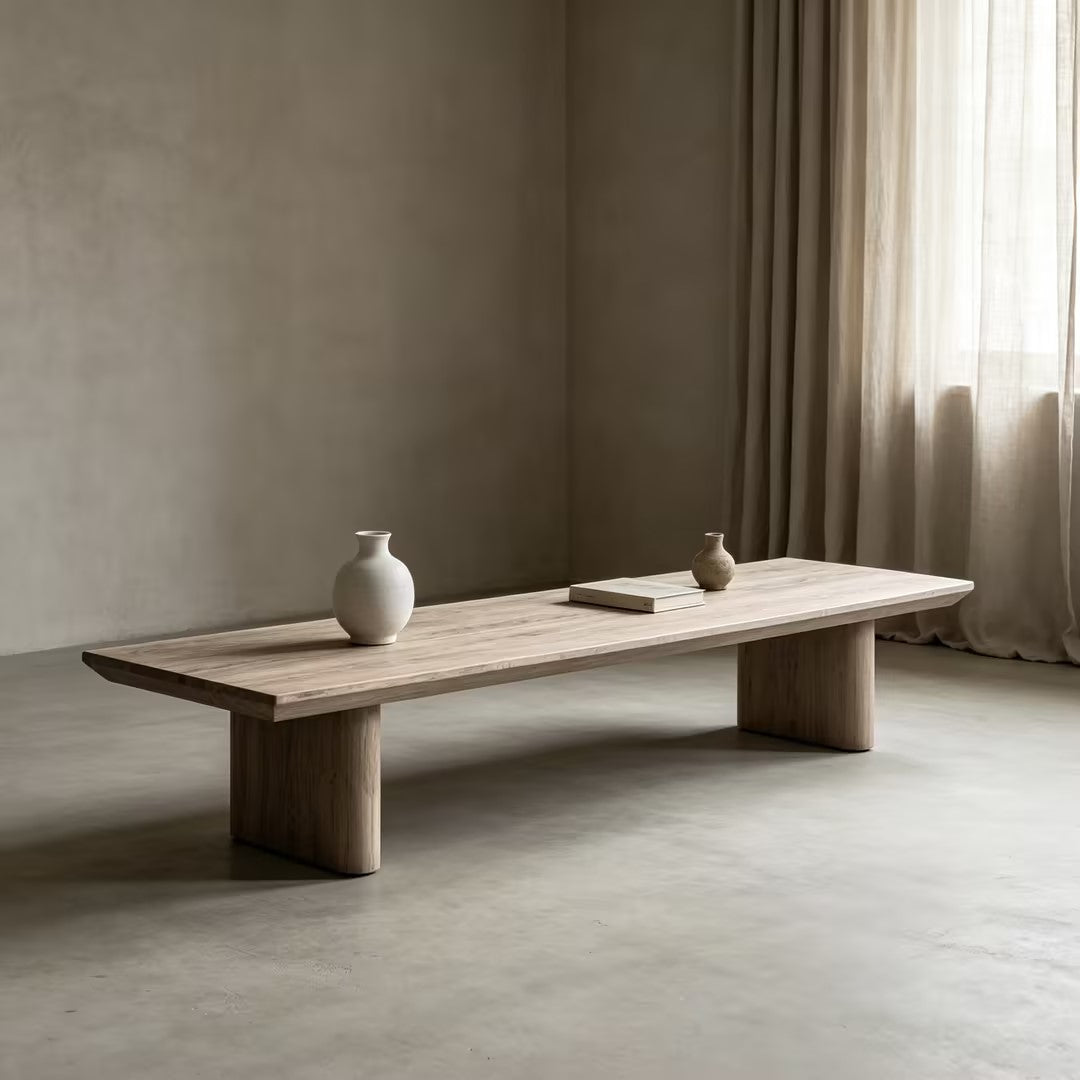
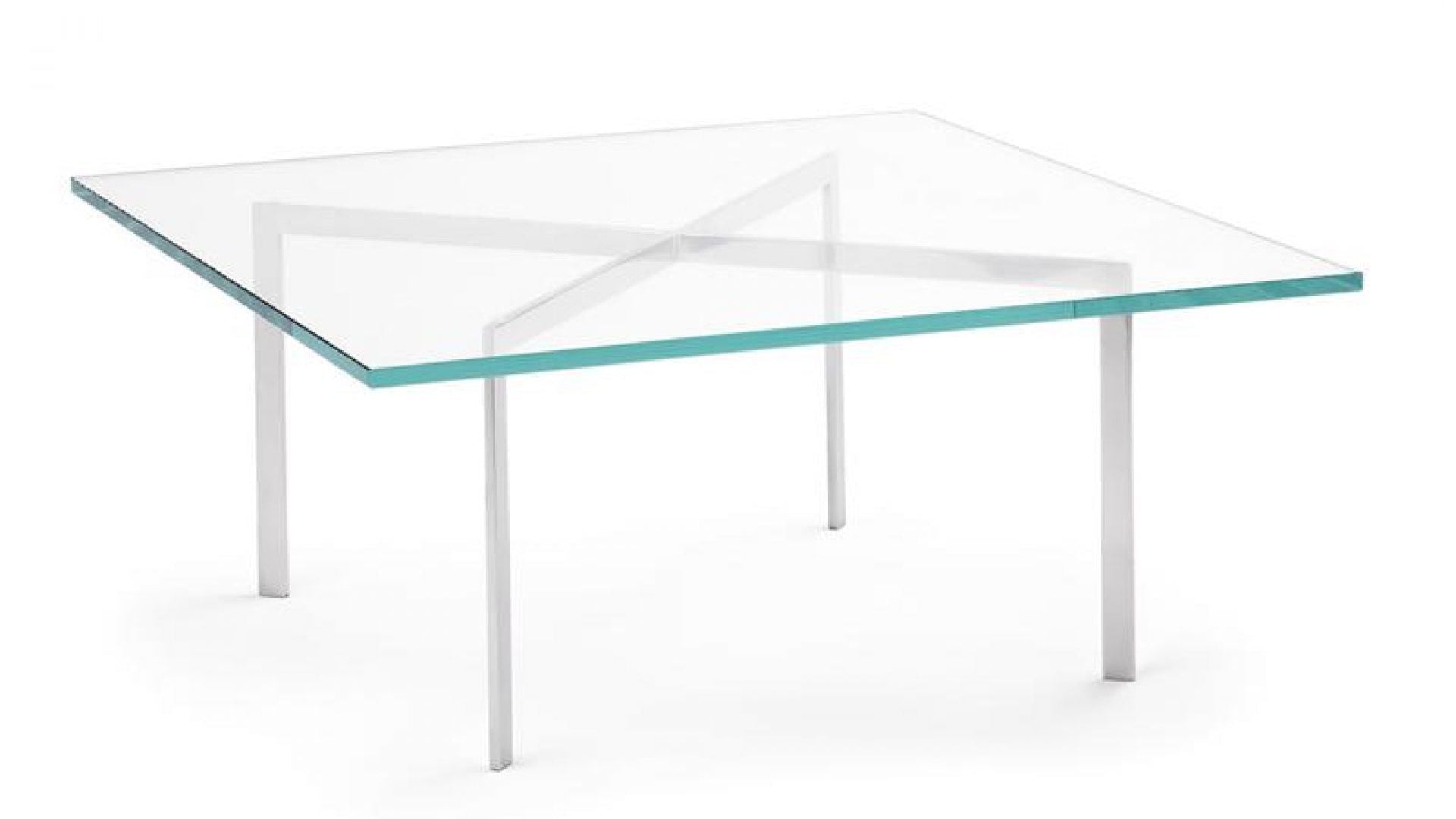
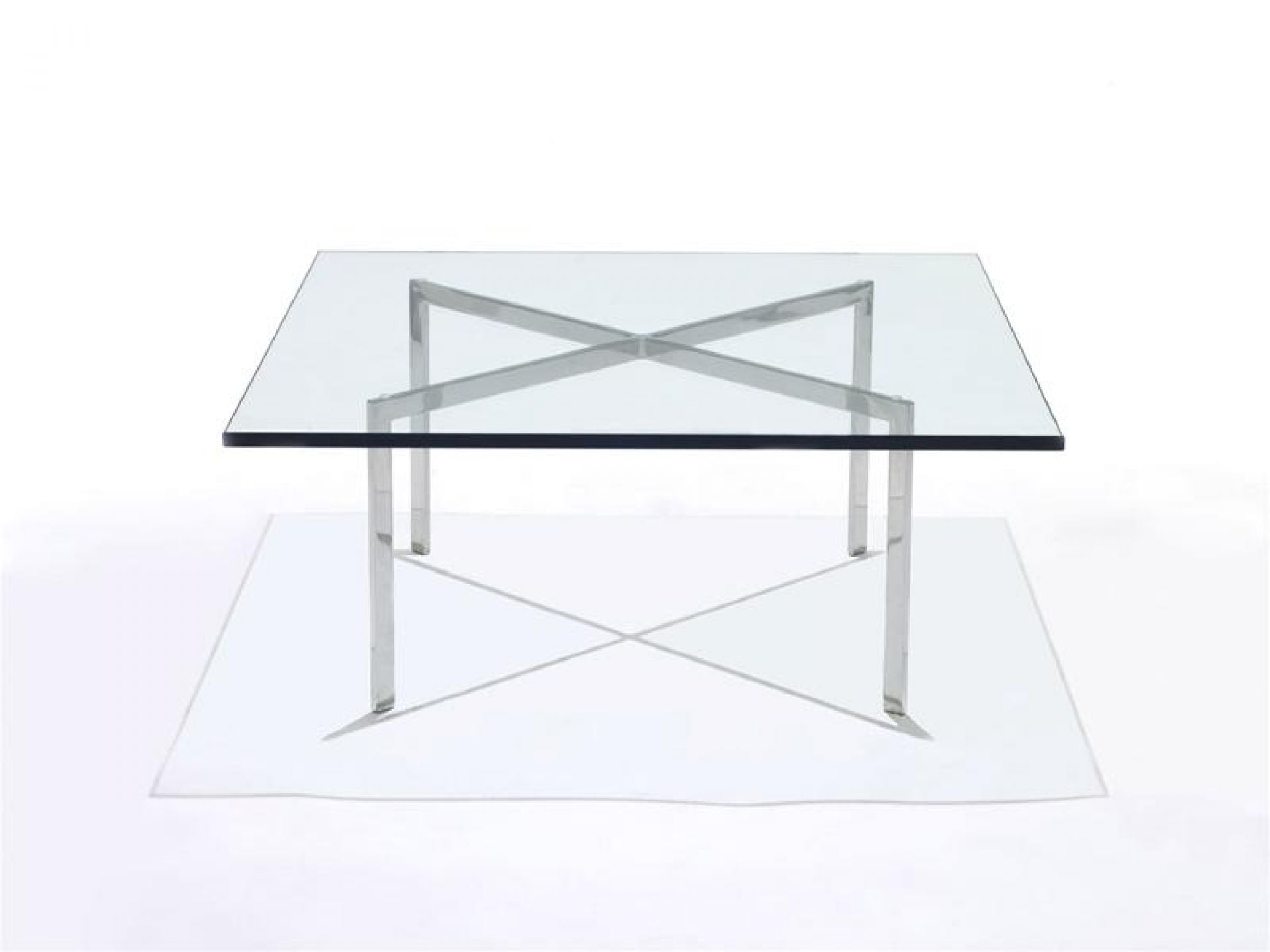
A rectangular table may fit well in front of a long sofa. It can also provide more surface space.
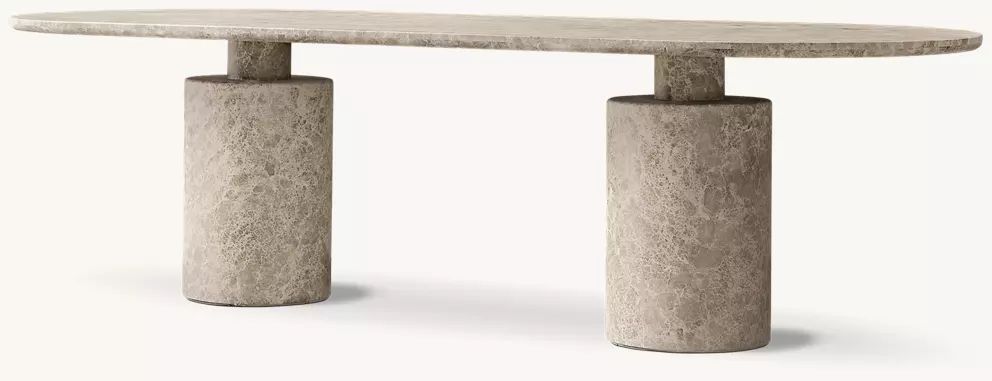
A round or oval table has no sharp corners, which may make it easier to walk around in a tight area.
Choose the shape that fits your sofa and leaves enough room to move.
How Do You Choose the Right Rug Size?
A rug can help bring the sofa, chairs, and coffee table together.
A rug that is too small may make the furniture look separate. A larger rug can help the seating area feel more connected.
If possible, choose a rug large enough for the front legs of your main seating pieces to rest on it.
But do not choose a rug so large that it gets in the way of doors or other important paths.
Measure the seating area before shopping.
Can an Ottoman Replace a Coffee Table?
Sometimes.
An ottoman can be a footrest and an extra seat. If you add a suitable tray, it may also work as a place to set drinks or books.
This can be useful when you want fewer furniture pieces in your room.
Just make sure the ottoman is the right size and can be moved when you need more space.
6. Make Your Small Living Room Look Bigger
A small living room does not have to feel crowded.
The way you arrange furniture, use light, and choose colors can change how the room feels.
Keep the Main View Open
Stand at the entrance and look into your living room.
Can you see the window? Is the view blocked by a large sofa back or a tall cabinet?
If possible, arrange the furniture so the room feels open when you enter.
In some rooms, placing the sofa against a wall is the best choice. In others, moving it away from the wall can help create a separate seating area.
There is no single rule for every room. Use the layout that leaves the most useful space.
Use Light and Color Carefully
Light walls, simple curtains, and natural daylight can help a small room feel open.
But you do not have to choose only white or beige furniture.
A deep blue sofa can look beautiful in a small living room. Pair it with a light rug, warm wood, and simple accessories to balance the darker color.
Try to choose a few main colors instead of using too many different shades.
Choose a Few Useful Pieces
You do not need to fill every empty corner.
A sofa, a chair, a coffee table, and a rug may be enough for many small living rooms.
Before adding another item, ask yourself what it will do.
Will it provide seating? Storage? Better lighting?
If it has no clear purpose, the room may be better without it.
7. Solve Three Common Small Living Room Layout Problems
Every home is different. A long, narrow room needs a different plan from a square room or a room with doors on several walls.
Here are three common problems and ways to solve them.
Problem 1: A Long, Narrow Living Room
A narrow living room can feel like a hallway if the furniture blocks the main path.
What to try:
-
Place the sofa along a long wall if this keeps the walkway clear.
-
Choose a coffee table that leaves enough room to pass.
-
Place a lounge chair near the far end only if there is enough space.
-
Avoid adding large chairs on both sides of the sofa if the room is already tight.
A straight sofa may work better than an L-shaped sofa in some narrow rooms. Measure the space before deciding.
Problem 2: A Living Room with Doors on Several Walls
This layout can be hard to plan because doors and windows take up much of the wall space.
What to try:
First, mark every door and the space it needs to open.
Then find the largest clear area for your main seating.
Keep the paths between doors open. Do not place furniture in a spot that makes it hard to enter or leave the room.
A modular sofa may help if the pieces fit the available space. A separate lounge chair may be easier to move when you need to change the layout.
Problem 3: A Living Room That Also Needs a Home Office
Working from home can make a small living room harder to arrange.
You need a place to work, but you also want a comfortable space to relax.
What to try:
-
Place a compact desk near a wall or window if it suits your work.
-
Keep the desk area separate from the main seating area.
-
Choose a chair that fits under the desk.
-
Keep work items together when they are not in use.
-
Use a rug or lamp to help define the work area.
You do not need a wall to separate the two spaces. A simple change in furniture placement may be enough.
8. Connect Your Living Room to a Balcony
If your living room opens onto a balcony or patio, you may have more usable space than you think.
The trick is to make the indoor and outdoor areas feel connected.
Keep the View Toward the Balcony Clear
Avoid placing large furniture directly in front of the glass doors if it blocks the view or makes it hard to walk outside.
Keep the balcony tidy and choose outdoor seating that fits the space.
Even one comfortable outdoor chair can make the balcony more useful.
Use Similar Colors and Materials
You can connect the two areas by repeating a color, shape, or material.
For example, a cream indoor rug may work with light outdoor cushions. A deep blue sofa indoors could be paired with a small blue detail outside.
The furniture does not need to match exactly.
A few shared details can make the whole space feel more connected.
Choose Outdoor Furniture for Your Weather
Before buying outdoor furniture, check whether it suits your local weather.
Look at the frame, fabric, cushions, and care instructions. Some outdoor sofas are made for covered patios, while others can handle more direct exposure.
Do not assume every outdoor sofa can stay outside all year.
With a good layout, your balcony can become a useful place to read, relax, or enjoy a morning coffee.
9. Use This Checklist Before Buying New Furniture
Before you buy a sofa, chair, or coffee table, check your plan.
Room layout
-
I have measured the room.
-
I have marked the doors and windows.
-
I know where the main walking paths are.
-
I have checked how the doors open.
-
I have tested the layout on the floor.
Furniture size
-
The sofa fits the available space.
-
There is enough room around the coffee table.
-
The chairs do not block the main walkway.
-
The rug fits the seating area.
-
I have checked the size of each modular piece.
Buying and delivery
-
The furniture can pass through my entrance and hallway.
-
I know which modules are included.
-
I have checked the materials and care instructions.
-
I know the expected production and delivery times.
-
I understand the delivery service and any extra costs.
A few minutes of planning can help you avoid buying furniture that does not work in your home.
10. Frequently Asked Questions About Small Living Room Furniture Arrangement
-
How do you arrange furniture in a small living room?
Measure your room, place the sofa first, and keep walkways clear. -
Can an L-shaped sofa fit in a small living room?
Yes, if it fits the room without blocking doors or walkways. -
What size sofa is best for a small living room?
Choose a sofa that fits your space and seating needs. -
Is a modular sofa good for a small apartment?
Yes, if the modules fit your room and offer a useful layout. -
How can I make a small living room look bigger?
Keep the layout simple, avoid bulky furniture, and let in natural light. -
How can I add more seating without crowding the room?
Try a lounge chair or an ottoman instead of a second sofa.
Final Thoughts: Make Your Small Living Room Work for You
A small living room can still be a great place to relax, read, watch TV, and spend time with family.
You do not need to fill every corner or buy the smallest furniture you can find.
Start with the way you move around the room. Choose a sofa that fits your space. Add a lounge chair or ottoman only when it serves a clear purpose.
A modular sofa may give you more layout choices. A well-placed chair may provide the extra seat you need. And a tidy balcony may offer another place to relax.
The best layout is not the one that looks perfect in a photo. It is the one that makes your everyday life easier.
Looking for furniture that fits your space?
Explore Vintara Design's modular sofas, lounge chairs, and outdoor sofas. Compare sizes and available options to find furniture that works with your room and your lifestyle.
Not sure which layout is right for you? Measure your room and contact us with the dimensions. We can help you review the available options before you order.
Product sizes, materials, configurations, and customization options vary by model. Please confirm the details of your chosen product before placing an order.